

Monthly commentary
Did you ever watch the original Willy Wonka and the Chocolate Factory, with Gene Wilder?
In particular, the scene where a boat moves faster and faster down a chaotic tunnel, with Willy Wonka chanting over and over.
It’s a crazy, confusing scene – even when watching as an adult. (Downright terrifying as a child!) I’m bringing it up because it sums up how I think most investors have felt about 2026.
Nothing quite going as planned, no-one’s sure what’s going to happen next but it all just keeps happening faster and faster and faster…
Venezuela, AI, Iran. Inflation, recession, volatility. Energy prices, mortgages, private credit. It’s all just kept building.
It can feel very tempting to panic, to try and get off the boat and flee the factory – to bail out of the market and to never go back.
But. In the film, Charlie Bucket doesn’t panic. He’s curious and calm – and ends up owning the whole chocolate factory!
That’s quite a good model for how to invest at times like this. Try to keep calm, even when others are screaming. Don’t rush to do things when the world’s changing so quickly; people who fled to gold this month have found that out the hard way, as did people who rushed into the oil market when it hit $110.
The same is likely to be true if/when the conflict in the Middle East stops. People will be overwhelmed with relief and end up doing other silly things out of greed. Again, calmness is probably the right move. Wait for the data to stop looking weird. Get a real sense of what has and hasn’t broken in the world, before fully committing.
That unsettling boat ride scene in the movie only lasts about 90 seconds, in a 100-minute-long film. I remember it vividly, but it isn’t the whole story. I’m hoping the same will be true of the start of 2026, when put in perspective of the whole year/decade. For now, I’m in the boat, a little bemused, but staying calm.

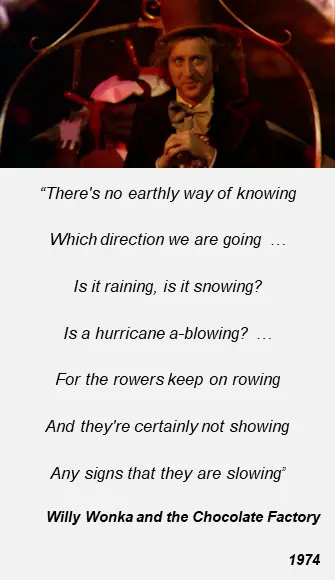
Chart of the month
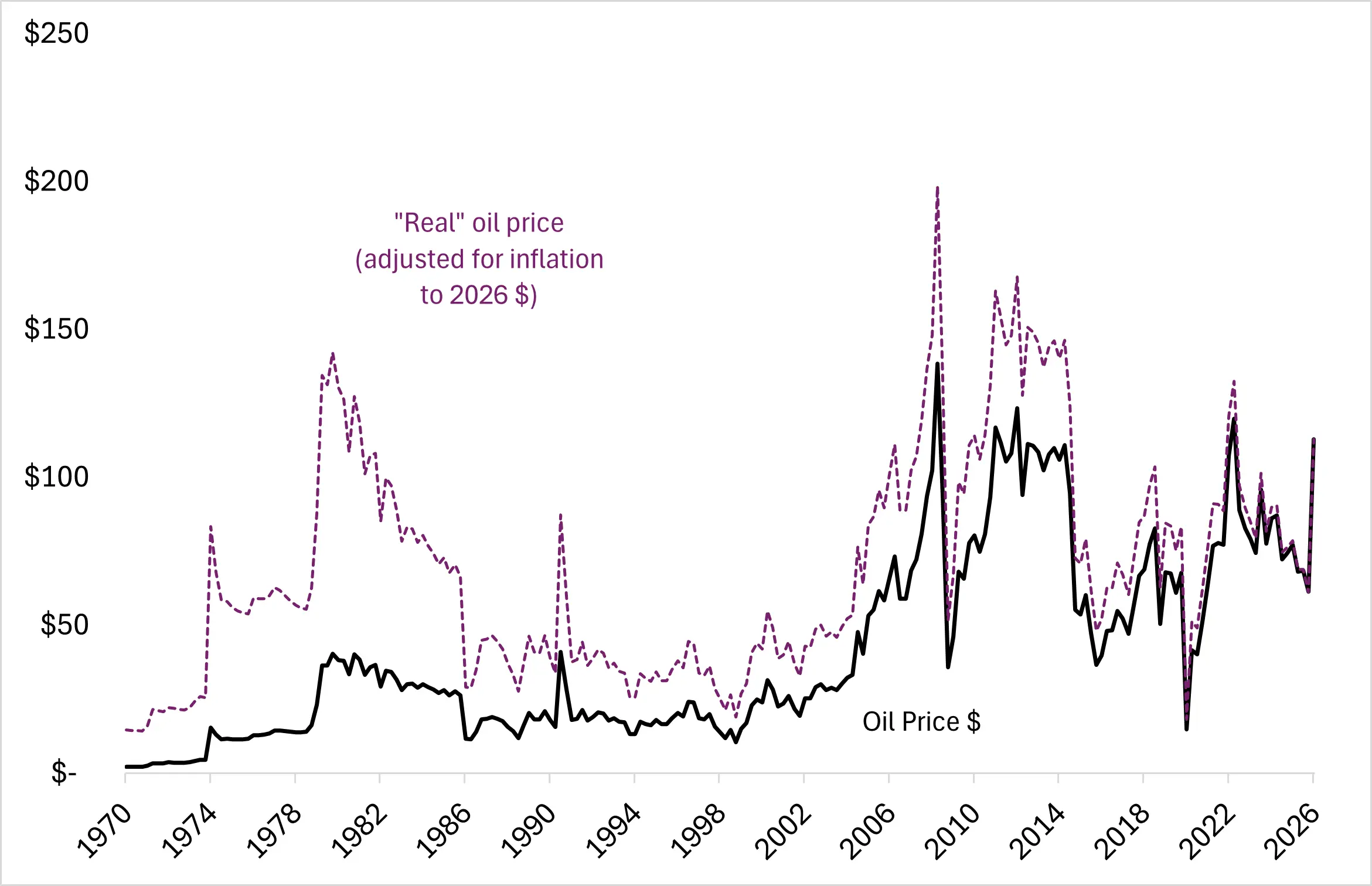
Round numbers do funny things to our brains. With oil, ever since the financial crisis in 2008, the key number is $100. Once the price per barrel goes higher than that, people start noticing. That’s when they start thinking about inflation and begin queuing at petrol stations.
But that same concept – inflation – means that $100 meant more in the past than it does today.
Applying that to the oil price is interesting. In the chart below, we’ve shown the dollar price of oil in black, and then shown in purple what that would have been the equivalent of in today’s money.
So, the price spike in the late 1970s would be the equivalent of hitting $150 in today’s dollars (from a starting point of around $20). And 2008 would feel like oil at $200 in today’s money!
Source: BEA/7IM
March markets wrap
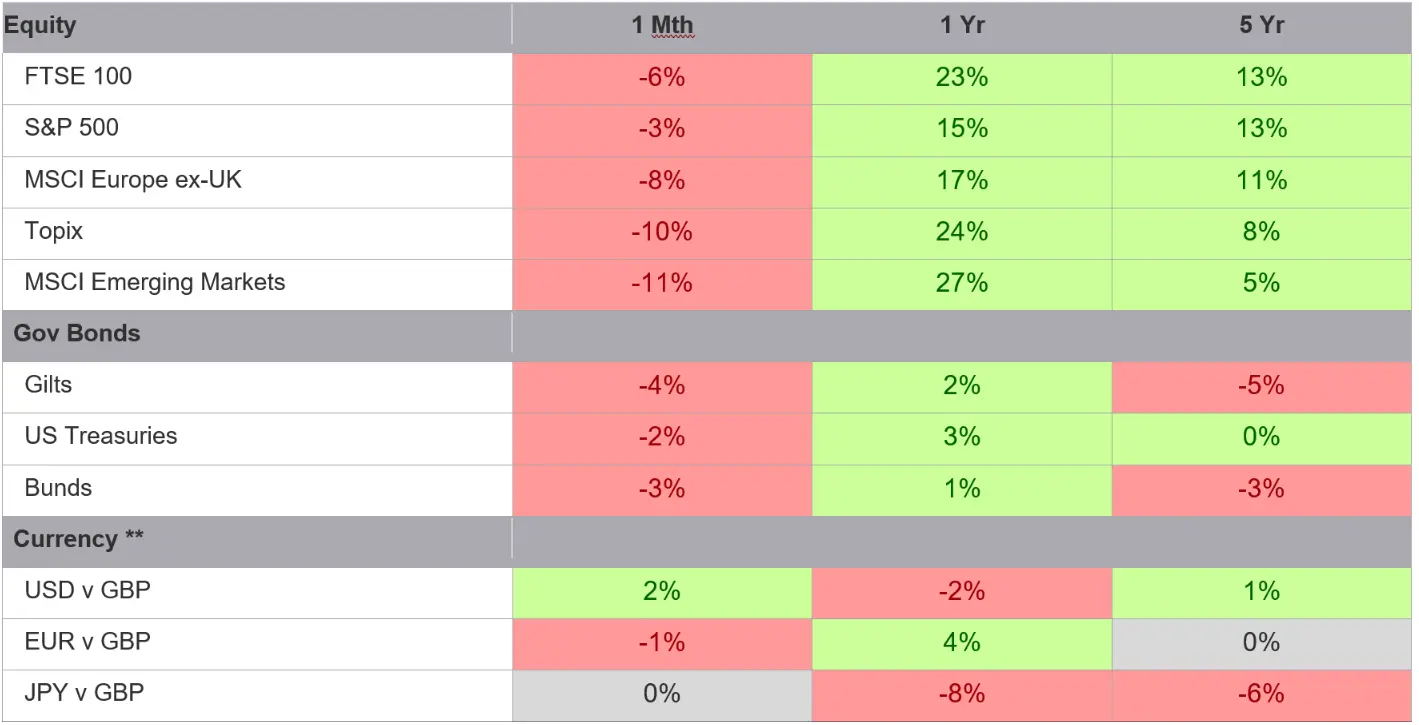
The fallout from the Iran war came at a bad time for investors, compounding existing worries about sticky inflation and slowing global growth. The sudden prospect of sharply higher oil prices, more inflation and higher interest rates are a toxic mix for markets. At one point the S&P 500 Index was down 9% from recent highs. Similar falls were seen around the world.
At a sector level, the pain hasn’t been evenly distributed. Big Tech – which on the surface appears insulated from the turmoil in oil markets – has been hit hard, because so much of its value comes from long-off future earnings. Higher interest rates reduce the value of those future earnings. Meanwhile, oil giants like Shell and Exxon Mobil have hit record highs. The UK market was in a twist, caught between booming oil stocks and falling bank stocks.
Gold – often seen as a safe haven – fell by nearly 20%, calling into question its status as a diversifier. Bonds had a nasty month, with 10-year gilt yields briefly topping 5% and hitting their highest level since the 2008 crisis.
Market movers
Quoted returns are in GBP
What we’re watching in April
The end of April may matter most, with interest rate decisions and insights on what’s happening with AI all within 48 hours. Buckle up.
- 29 April – Federal Reserve interest rate decision. Alphabet, Meta and Microsoft report earnings.
- 30 April – Bank of England interest rate decision. Apple and Amazon report earnings
More from 7IM




I confirm that I am a Financial Adviser, Solicitor or Accountant and authorised to conduct investment business.
If you do not meet this criteria then you must leave the website or select an appropriate audience.