

Current view on markets and the conflict in Iran
What’s happening in the Middle East
It was another complicated weekend of geopolitical events for markets to manoeuvre.
We know the footage of missiles streaking through the sky in the Middle East is alarming and concerning, especially as there’s no immediate suggestion that either side of the battle are going to step down. This is both a humanitarian and economic event, and our thoughts are with those affected.
Our portfolio positioning
From a portfolio standpoint, we’re broadly neutral on risk and maintain a well-diversified spread of assets, across regions and sectors. Our portfolios have near-zero direct equity and emerging market bond exposure to Iran or Israel. The broad MSCI World Index has little exposure to Israel. Israel makes up no more than 0.06%, even in our Adventurous strategies.
How we’re monitoring developments
There’s no reason in the immediate future to move our position in any way but we’re continually monitoring the situation. We’re also keeping an eye on how our data-driven models are interpreting current conditions. Our models guide and inform our positioning but of course don’t guarantee outcomes. We’ll update as the situation develops.
How markets responded initially
Since the weekend, markets have been reacting to the latest information.
Equities have moved lower in the UK, US, Europe and Asia, as a result of initial uncertainty, combined with the worries of higher energy costs. Almost all of Iran’s oil is sold to China.
Why oil prices moved
The big move has been in the oil price, which at time of writing, is over $80 dollars a barrel.
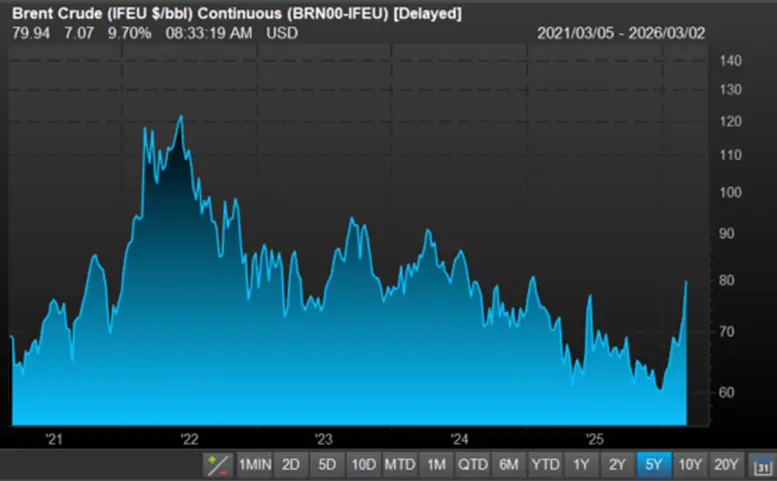
Source: FactSet
What higher energy prices could mean for inflation
A key watchpoint is the potential knock-on impact to inflation. If energy prices go higher and stay high, then inflation is expected to follow. That means government bonds might not provide the same protection as usual and central banks may not necessarily cut interest rates at the anticipated levels. That's part of the reason we choose to diversify our diversifiers, using alternative strategies in addition to bonds.
What history shows about markets and conflict
As shown by early market movements, recent conflicts haven’t always led to long‑term market declines, although every situation is different. History also shows that six months after the start of many past conflicts, markets have often recovered.
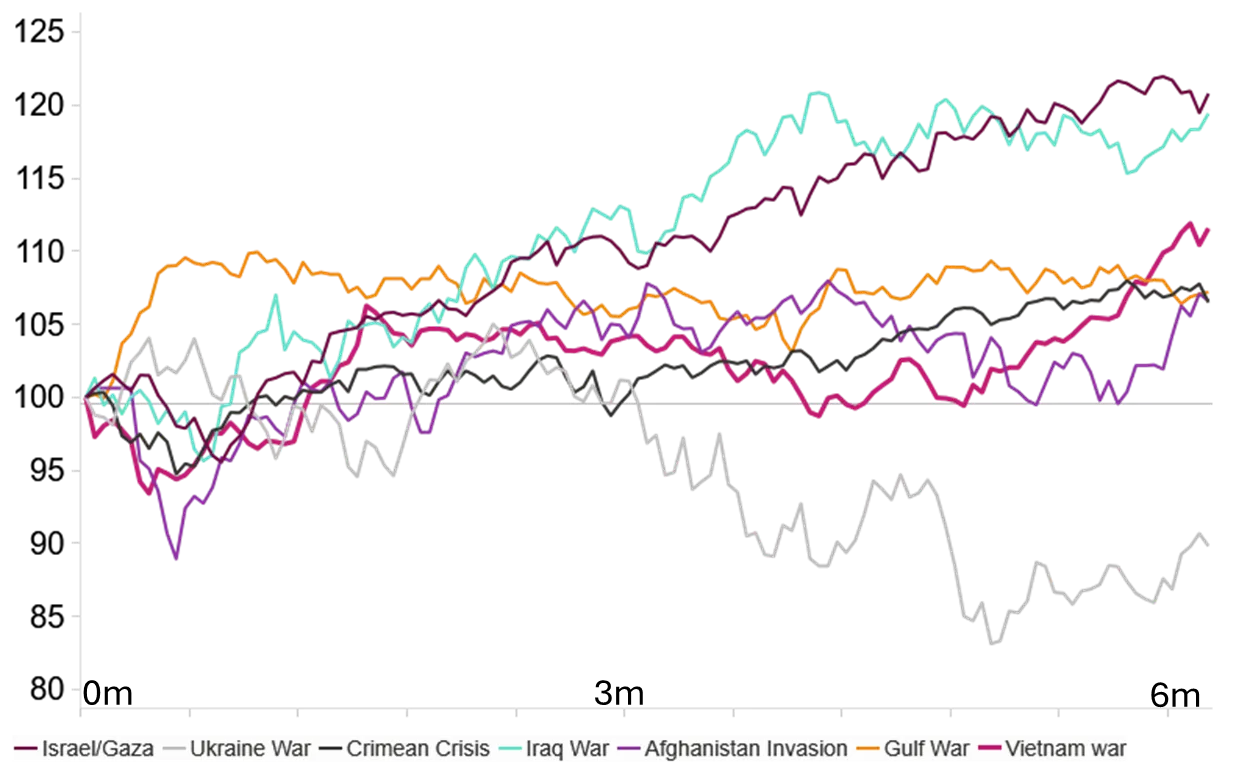
Source: FactSet. Performance of the MSCI AC World in USD.
Even in 2022, with the Ukraine war, the fall in markets was largely due to rising rates, rather than Russia.
Speak to us if you need support
As always, please contact your adviser if you need any support or further information.
More from 7IM



I confirm that I am a Financial Adviser, Solicitor or Accountant and authorised to conduct investment business.
If you do not meet this criteria then you must leave the website or select an appropriate audience.