

Iran: Taking stock and looking ahead
It’s been over a week since the US and Israel began military strikes on Iran. Many people will have family or friends with ties to the Middle East, which can make the situation feel a lot more immediate and frightening.
Anyone hoping for a quick resolution over the weekend has been disappointed. The immediate signs are that both sides are willing to continue with military action. The positives are that the fighting hasn't escalated or spread significantly, but the bad news is that energy shipments from the Strait of Hormuz have halted, and it’s currently difficult to see a clear route back to the way things were.
So, as of Monday morning (9 March), oil prices have topped $100 per barrel, and equity markets are down again – especially in Asian nations such as Japan or South Korea who rely heavily on imported oil.
Concerns about the impact on global growth are already circulating (with the International Energy Agency discussing a release of emergency oil reserves). It can be easy to get sucked into a doom spiral – the press is already full of people predicting global recession, and comparing the situation to the 1970’s.
However, as we’ve seen before, things can change quickly. A ceasefire, or the opening of the strait, or the release of energy reserves, or any of a number of other events could suddenly settle the ship. We wouldn’t be surprised to see more market volatility this week, but we’re a long way from panicking.
What’s changed in portfolios
We believe that having a diversified portfolio is the best way to navigate periods of volatility. So, it’s more about how you set up the overall strategy than trying to react and change your investments during turbulent periods. We use short-term changes to help deliver returns in some funds and portfolios. Last week, we slightly increased exposure to energy and decreased communication services (this includes stocks like Meta and Alphabet).
We haven’t changed the overall amount of equities. For a geopolitical shock to create a buying opportunity, markets need to fall to a point where the cheaper price makes it worth the risk of things getting worse. Our view is that equities haven't fallen sharply enough and there's still a risk of a worse outcome if it takes a long time for energy shipments to resume from the Strait of Hormuz.
US equities have been the most resilient region, due to the US not being reliant on Middle Eastern energy exports and because the dollar has risen vs. GBP, offsetting some of the fall in US equities for sterling investors.
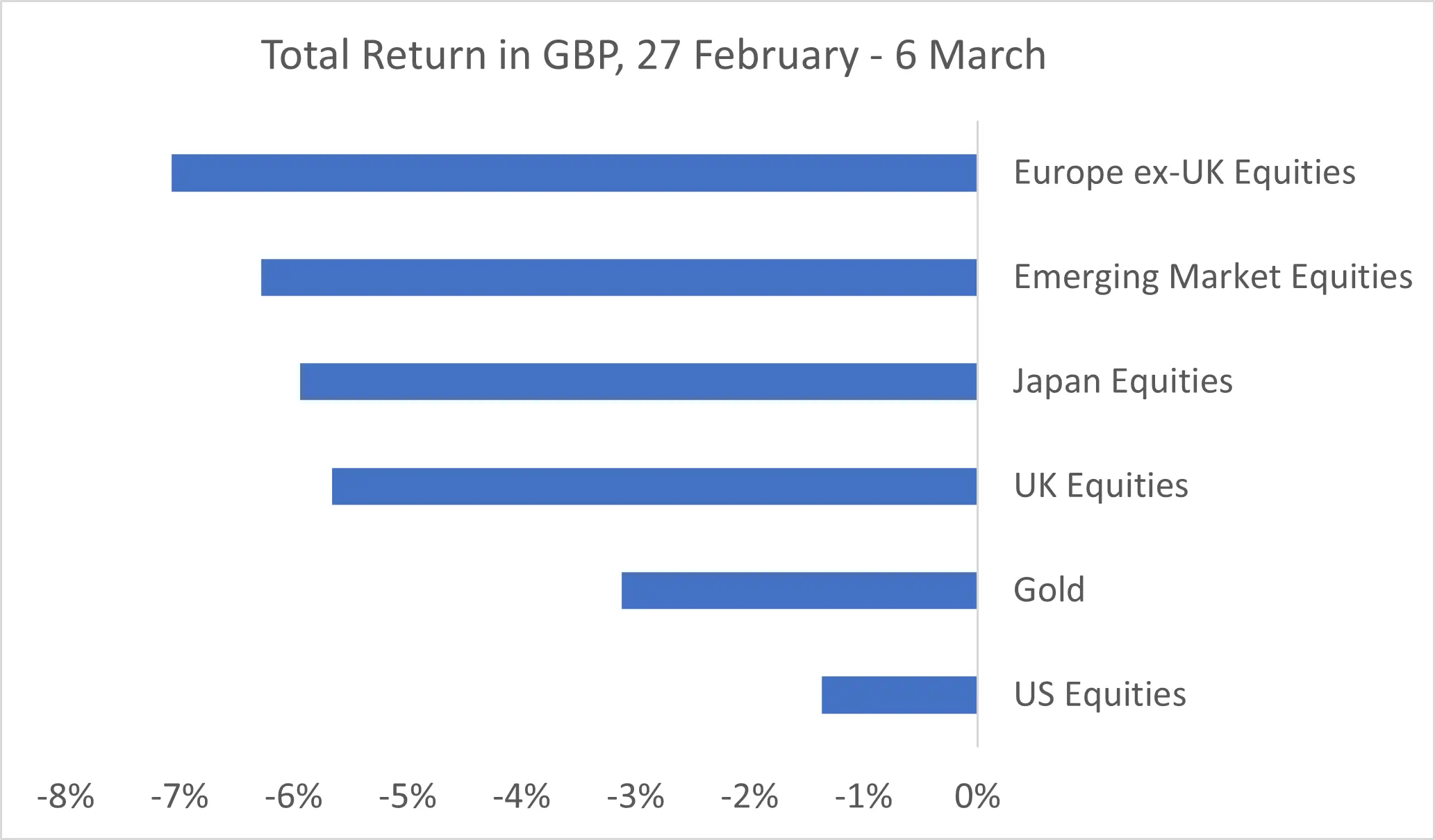
Source: FactSet. Data is the total return in GBP for major equity indices.
Higher costs ahead?
Geopolitical events impact markets when they’re big enough to influence economic growth, inflation or interest rates. Higher energy costs for an extended period could do just that, reducing what businesses and individuals can spend and invest. Last week UK energy companies removed some of their fixed price tariffs and some banks increased mortgage rates. Mortgage rates are linked to UK Gilts. Energy is a key input to inflation and with higher inflation, it could give the Bank of England less scope to reduce interest rates. These worries caused the yields for UK Gilts to rise. (The ‘yield’ is the annualised return you'd receive if you held the bond until maturity.)
Energy prices have risen. But, by how much depends on where you are and when you want the energy. Oil and natural gas have different prices in the US and Middle East. Both commodities use futures contracts, so you can buy them for next month or next year. There’s been steep price rises for oil that’s needed in March and April, but not as much for the second half of 2026. This tells us the buyers and sellers of oil believe the disruption won’t last too long.
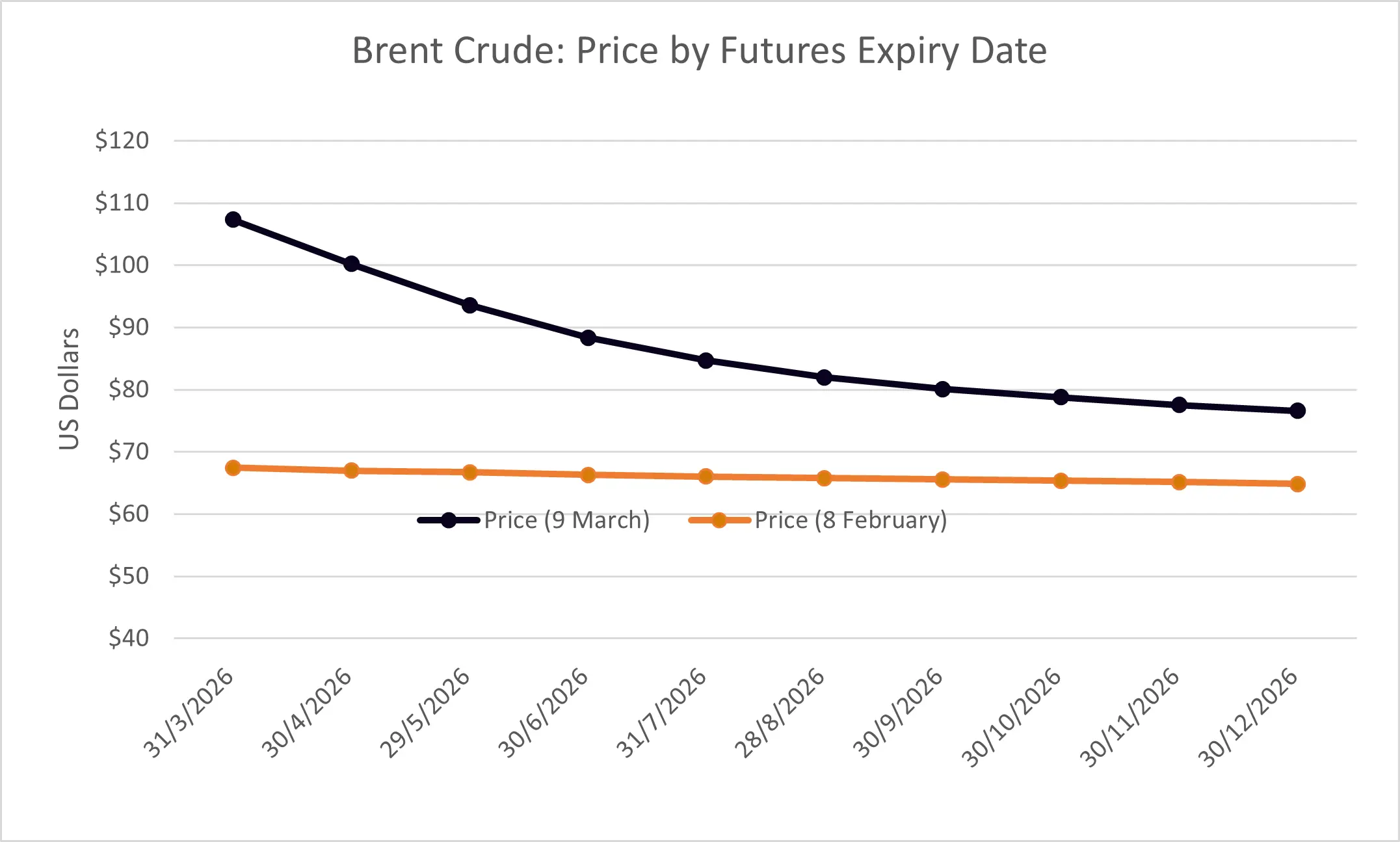
Source: FactSet. 9 March 2026 prices are as of 8:30am GMT.
Route to resolution
Ending the conflict will require cooperation. It’s different from the tariff-induced market falls of 2025. With that situation, President Trump was in control; he could change the tariff rates when he wanted to. With the Iran conflict, President Trump can't take us back to normal with an announcement. Even if the US stopped military action, it would take time to ensure safe passage of ships to deliver oil and natural gas.
How long the conflict lasts will depend on the willingness and ability of the different parties to keep fighting. The indications point to a shorter conflict, but there are no guarantees. President Trump tends to change his policies frequently. Plus, he's got US midterm elections coming up and high petrol prices generally don’t win votes. For Iran, the conflict is a fundamental threat. The limiting factor is likely to be weapons. We don't know how many missiles Iran has, but once the country runs out it will be difficult to resupply. Blocking the Strait of Hormuz isn't a long-term plan for Iran.
Events like these are unsettling, but the best course of action is almost always to remain invested. When risks lessen, markets can rise rapidly and unexpectedly. If you aren’t invested, you can miss out on those gains. The best approach is to have a long-term financial plan and diversified exposure to different parts of the market. If you have any concerns, please contact your business development manager.
More from 7IM



I confirm that I am a Financial Adviser, Solicitor or Accountant and authorised to conduct investment business.
If you do not meet this criteria then you must leave the website or select an appropriate audience.