

Bonds are back in town
Bonds are in the headlines again. Which is never usually a good thing. After all, bonds are meant to be boring.
For much of the 2010s, government bonds were the dull but necessary part of a portfolio. Their role was simple, yet effective: help protect and offset against the ups and downs of equity markets. But with interest rates and yields at record lows, protection came at a high price.
Then 2022 hit the bond market like a hurricane.
Inflation surged, fuelled by energy prices and strong consumers with excess post-COVID cash. Central banks ignored it… until they didn’t, then sharply raised rates to make up for their sluggishness.
Bonds fell. Equities fell. The relied-upon relationship between equities and fixed income fell apart. Diversification failed precisely when many investors needed it to work. Things got messy.
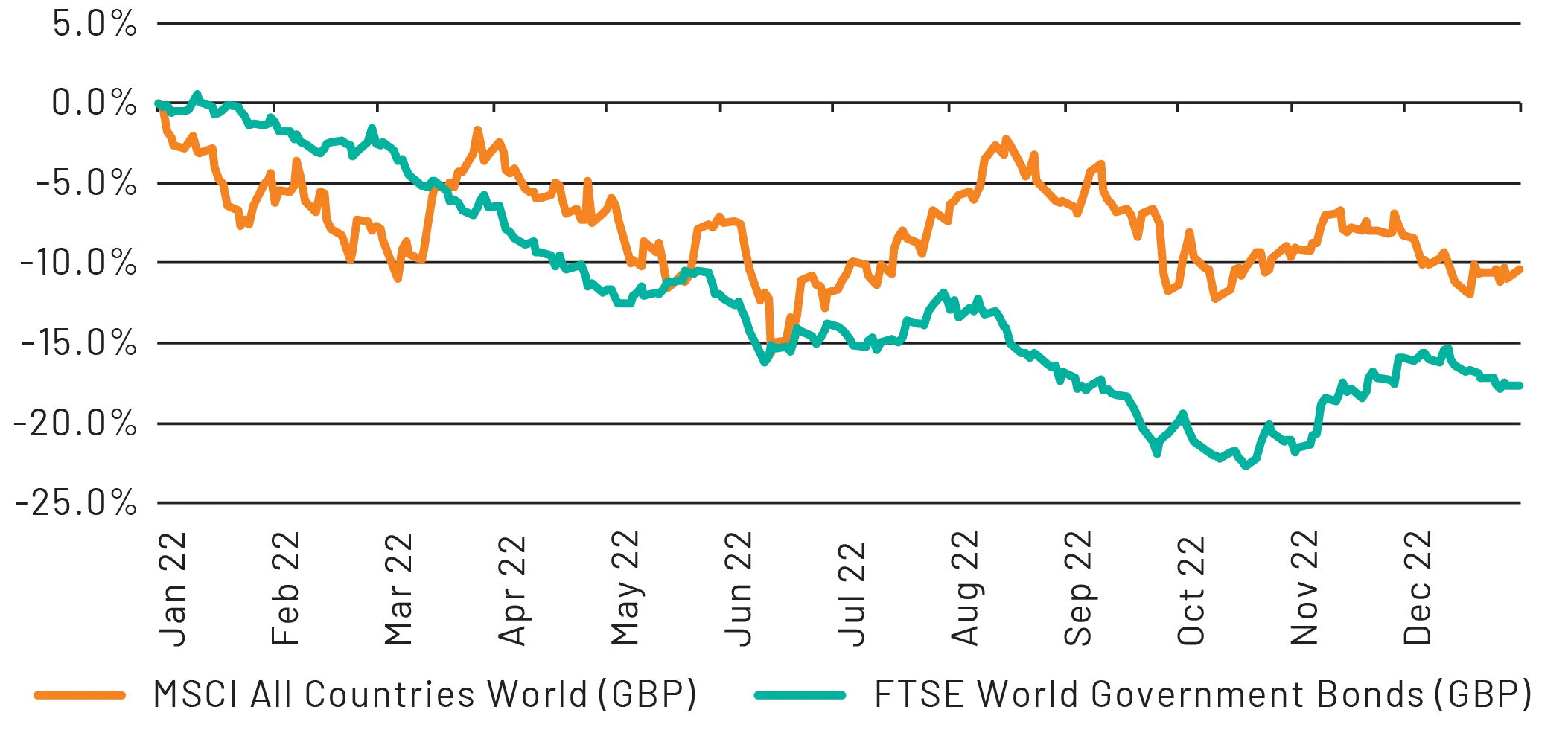
Total return in GBP. Time period - 01.01.2022 to 31.12.22
Today, with bond yields rising again, investors are nervous. So recently bitten, they’re now twice shy. But today isn’t the same as 2022.
Higher rates, rising inflation and increased government borrowing have already pushed bond yields higher. Investors now demand a better return before lending money to governments. Any further rate rise, while painful, would therefore be less of a nasty surprise than four years ago. That makes the risk/reward trade-off more interesting than the headlines might suggest.
Governments are also competing with technology companies for investor demand. Alongside increasing government bond issuance, companies such as Alphabet and Meta are borrowing heavily to build AI infrastructure. With more bonds on offer, investors can pitch one against another, putting further pressure on yields.
Bond yield maths
Yields are materially higher than during the “free money” era, and that changes the mathematics of investing.
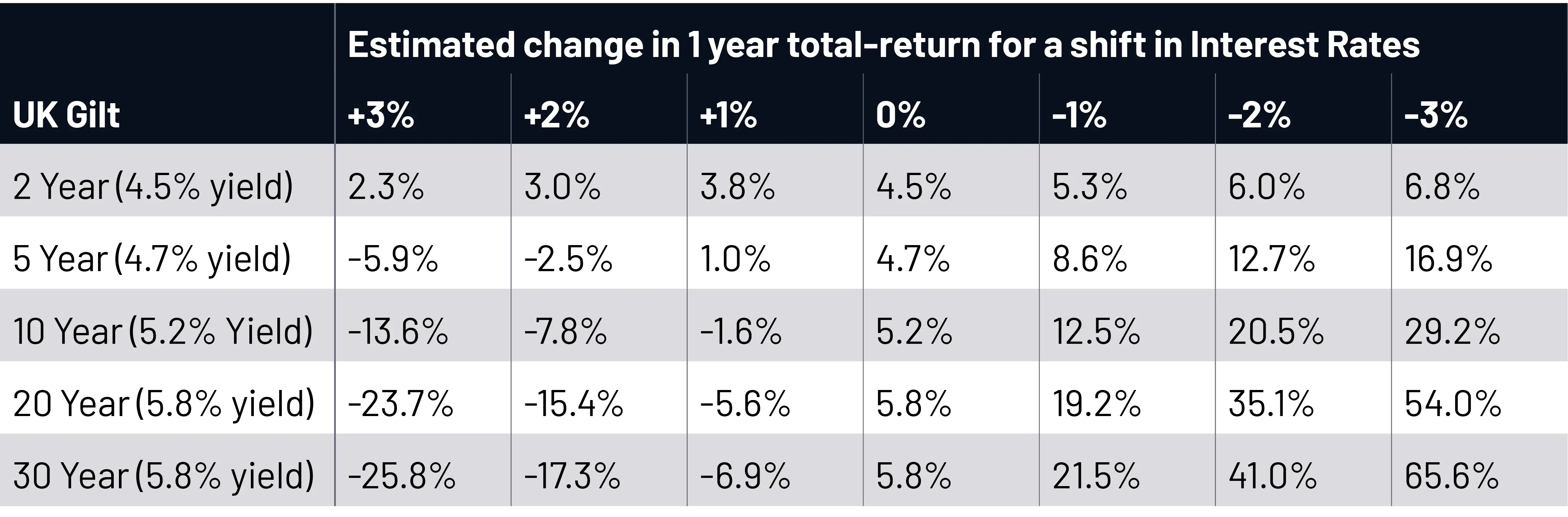
Higher starting yields mean more income, greater future return potential and more ability to absorb an initial rise in interest rates. A government bond yielding 5% offers a very different proposition to one yielding 0.5%.
Rates have to move aggressively upwards for investors to really lose out, because income cushions the losses. At the same time, any fall in interest rates can boost returns quickly.
Where does this leave investors today?
Bond yields can rise for many reasons, including fears of persistent inflation. The Middle East, Russia, El Niño and other factors could keep price pressures elevated. And if inflation rises, rates may rise too.
You could argue one of the main reasons yields remain high is the strength of the US economy.
Households and businesses remain in good financial health, which helps them cope with higher borrowing costs. Company profits are growing strongly, helped by continued spending on AI infrastructure. Employment also remains resilient. Rather than replacing workers, AI appears to be helping many people become more productive.
Bonds look more attractive today. They can provide income, help protect capital and often hold up better when economic growth slows.
But what if growth stays resilient? What if inflation persists? What if yields keep rising?
In those circumstances, investors may need something to diversify the diversifiers. This is where alternatives come in.
What on earth is an alternative?
Traditionally, portfolios classify anything that isn’t an equity or bond as an alternative: infrastructure, property, commodities and even niche investments such as song rights.
We use a narrower definition. A true alternative should behave differently from shares and bonds. If it rises and falls for the same reasons, it is not providing much diversification.
We make space for alternatives by reducing our exposure to bonds. Within the alternatives basket, we combine in-house strategies that use liquid investments rather than illiquid holdings such as property or infrastructure. This helps us keep costs low and, more importantly, understand how the strategies should behave in different market environments.
Using several strategies can help protect against downside when equity markets fall. It can also provide protection and opportunity when the traditional diversifier, fixed income, doesn’t do its job, as we saw in 2022.

More from 7IM



I confirm that I am a Financial Adviser, Solicitor or Accountant and authorised to conduct investment business.
If you do not meet this criteria then you must leave the website or select an appropriate audience.